

Customized landing pages play a key role in modern digital marketing. Instead of showing the same message to every visitor, these pages adapt content, layout, and calls to action based on user intent, behavior, or traffic source.
In this article, you’ll learn what customized landing pages are, why they convert better, how they improve user experience, and how to build them effectively. We’ll also share real conversion statistics, and show how tools like involve.me help you create high-converting personalized landing pages without coding.
What Are Customized Landing Pages?
A customized landing page is a standalone page designed to encourage one specific action, such as signing up, requesting a demo, or downloading a resource. Unlike standard landing pages, customized landing pages adjust their messaging and content based on who the visitor is and how they arrived.
Customization can include:
Different headlines for different traffic sources
Personalized offers based on user behavior
Dynamic CTAs tailored to user intent
Content that changes by location, industry, or device
For example, a visitor coming from a Google Ads campaign may see a strong sales-focused message, while an email subscriber might see a softer, relationship-driven CTA.
The goal is simple: make the page feel relevant to the visitor. When people see content that matches their needs, they are more likely to engage and convert.
embed
Why Customized Landing Pages Matter in 2026 and Beyond
Customized landing pages matter because they:
Reduce friction in the user journey
Match visitor expectations
Increase trust and clarity
Improve overall conversion performance
According to marketing research:
89% of marketers report positive ROI from personalization
Personalized CTAs convert up to 42% more visitors than generic CTAs
Campaigns using landing page personalization often see 30–40% higher conversion rates
As competition increases and ad costs rise, personalization becomes essential for making every visit count.
Key Landing Page Statistics You Should Know
Understanding landing page benchmarks helps businesses evaluate performance and identify areas for improvement. These statistics highlight why customization and personalization are no longer optional.
Across industries, the average landing page conversion rate sits around 6 to 7 percent. This means the majority of visitors leave without taking action. While this number provides a baseline, it also reveals a significant opportunity for improvement through targeted messaging and personalization.
Landing pages with targeted content consistently outperform generic pages. Pages that tailor messaging to specific audiences or traffic sources often convert two times better than pages that use broad, one-size-fits-all copy. When visitors see language and offers that reflect their intent, engagement naturally increases.
Email-driven landing pages tend to perform especially well. Conversion rates for email traffic can reach up to 19 percent, which is higher than most paid or social channels. This happens because email audiences are already familiar with the brand and are more receptive to personalized experiences. Customized landing pages extend that personalization and maintain momentum after the click.
Clear headlines and strong calls to action also have a major impact on engagement. Pages that communicate value clearly and guide users toward a single action can see engagement improvements of up to 80 percent. This reinforces the importance of clarity over clever wording. Users want to understand quickly what they are getting and why it matters.
Page speed is another critical factor. Faster loading landing pages consistently convert better than slow ones. Even small delays can cause visitors to leave before engaging. Customized landing pages should remain lightweight, focused, and optimized for performance, especially on mobile devices.
Taken together, these statistics reveal a clear pattern. Landing page success is driven by relevance, clarity, and speed. Customized landing pages help businesses exceed average conversion rates, improve user experience, and get more value from existing traffic. In 2026 and beyond, brands that continue using generic landing pages will struggle to compete, while those that invest in customization will convert more efficiently and build stronger connections with their audience.
Benefits of Customized Landing Pages
Customized landing pages offer clear advantages for businesses that want better conversions, stronger engagement, and more efficient marketing results. By tailoring content to specific audiences, these pages create experiences that feel relevant instead of generic. This relevance directly impacts how users interact with your brand and whether they decide to convert.
1. Higher Conversion Rates
Customized landing pages improve conversion rates because they speak directly to user intent. When visitors feel that a page was designed specifically for them, they are more likely to take action. Instead of scanning the page to determine relevance, users immediately understand that the offer matches their needs.
For example, B2B visitors may see industry-specific messaging that reflects their challenges, while returning visitors may be shown a different offer than first-time users. Calls to action can also change depending on where users are in the funnel, such as offering a demo to high-intent visitors or a guide to those in the awareness stage. Even small personalization changes like adjusting headlines, CTAs, or form questions can significantly increase form submissions and sign-ups. These improvements add up quickly, especially when traffic volumes are high.
2. Better User Experience
User experience improves when visitors do not need to search for relevance or figure out whether a page applies to them. Customized landing pages guide users smoothly toward the next step by presenting content that aligns with their expectations and intent.
When messaging is clear and tailored, users are less likely to bounce and more likely to stay on the page longer. Navigation feels simpler because the page focuses on one clear action instead of multiple competing options. This clarity helps users feel confident in their decision to engage. When users feel understood and supported, they remain engaged and develop greater trust in the brand.
3. More Efficient Marketing Spend
Paid traffic continues to become more expensive across search and social platforms. Sending all visitors to the same generic landing page often results in wasted budget because the message does not resonate with every audience segment.
Customized landing pages make marketing spend more efficient by aligning ads with specific landing page experiences. When messaging is consistent from ad to page, Quality Scores for paid campaigns improve, which can lower costs. Personalization also increases conversion rates, meaning businesses can generate more leads or sales from the same amount of traffic. Over time, this leads to a better return on investment and a lower cost per lead.
4. Stronger Lead Quality and Segmentation
Customization does not just improve conversion volume; it also improves lead quality. When landing pages are tailored to different user types, they allow businesses to collect more meaningful and relevant data.
Customized landing pages make it possible to ask questions that match the visitor’s context, such as role, industry, or intent. Leads can then be segmented automatically based on their responses or behavior. This allows qualified leads to be routed to the right sales or marketing team without manual effort. As a result, follow-ups become more relevant, conversations are more productive, and close rates increase.
How Customized Landing Pages Improve Conversion Rates
Customized landing pages work because they remove confusion and increase relevance.
They improve conversions by:
Matching the headline to the ad or email message
Reducing cognitive load with focused content
Using personalized CTAs that align with user intent
Presenting the right offer at the right time
When visitors don’t have to guess whether a page is for them, they are more likely to act.
How to Build Customized Landing Pages (Step-by-Step)
The steps below show how to build landing pages that are personalized, scalable, and conversion-focused.
1. Identify Your Traffic Sources
The first step is understanding where your visitors come from and what motivates them to click. Traffic sources shape expectations, intent, and readiness to convert. A visitor from a paid ad usually expects a direct offer, while someone from organic search may still be exploring solutions.
Paid ads, email campaigns, social media, and organic search all bring different types of users. When you identify these sources, you can align landing page messaging with the promise that brought users there. This alignment reduces confusion and increases the chances that visitors stay on the page and take action.
Customized landing pages work best when each major traffic source is paired with messaging that feels intentional and relevant.
2. Segment Your Audience
Once traffic sources are clear, the next step is audience segmentation. Not every visitor has the same needs, even if they land on the same page. Segmentation allows you to avoid one-size-fits-all messaging and deliver content that feels personal.
Users can be segmented by industry, job role, behavior, or funnel stage. A first-time visitor may need educational content, while a returning visitor may be ready for a stronger call to action. Segmenting users allows you to adapt headlines, offers, and form questions so the page feels designed specifically for them.
This level of relevance plays a major role in improving engagement and conversion rates.
3. Personalize Headlines and CTAs
Headlines and calls to action are the most visible elements on a landing page and have the biggest impact on conversions. Personalizing them helps visitors immediately understand that the page matches their intent.
A strong personalized headline reflects what the visitor is looking for and clearly communicates value. Calls to action should also focus on outcomes rather than generic actions. CTAs such as “Get a Personalized Quote,” “See Your Custom Results,” or “Build Your Own Funnel” make the benefit clear and reduce hesitation.
Personalized CTAs consistently outperform generic ones because they tell users exactly what they will receive after clicking.
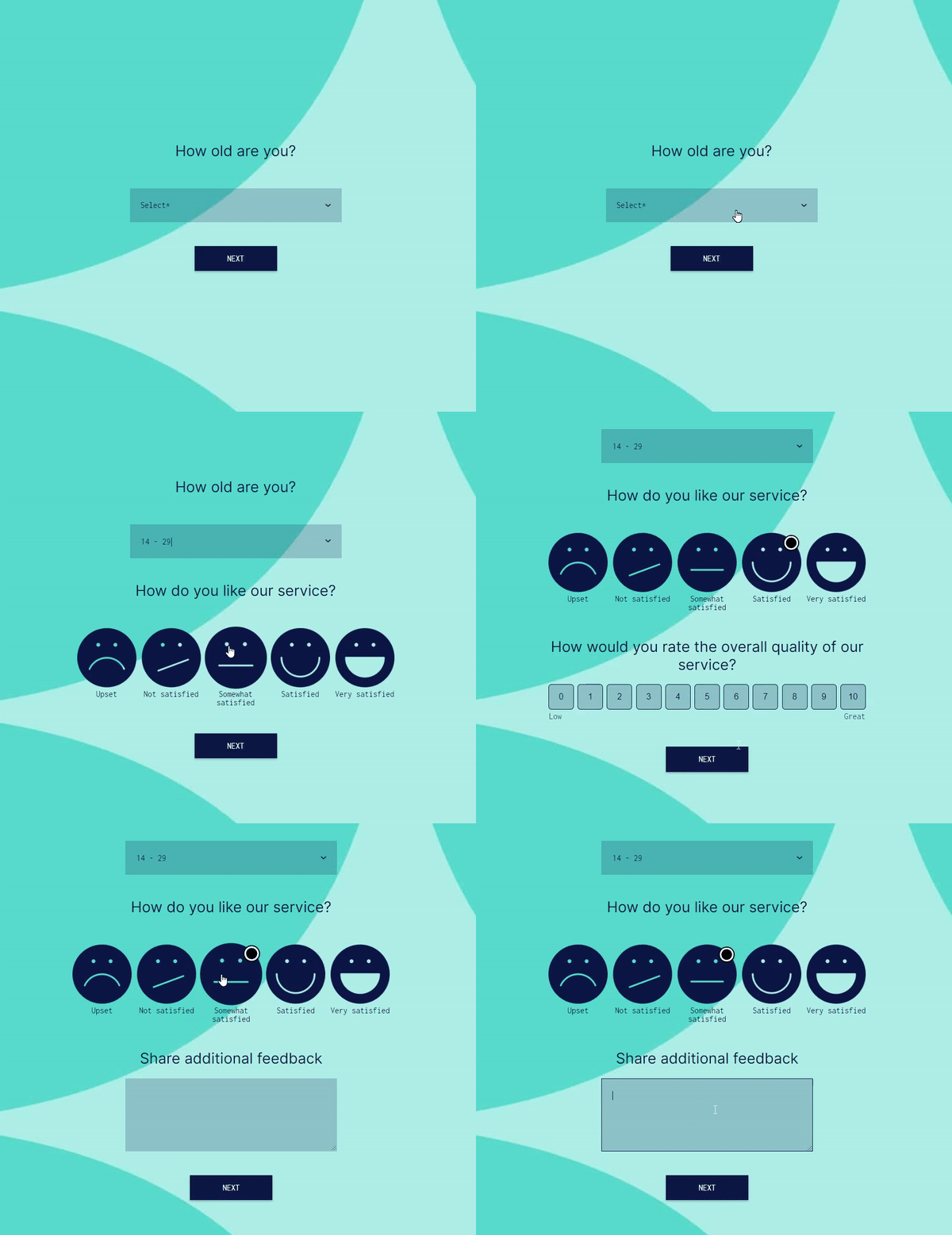
4. Use Multi-Step and Conditional Flows
Long pages and complex forms often overwhelm users and lead to drop-offs. Use involve.me to create multi-step and conditional flows help solve this problem by breaking the experience into smaller, more manageable steps.
Instead of asking for all information at once, multi-step flows guide users forward gradually. Conditional logic allows the landing page to adapt based on user responses, showing only relevant questions or outcomes. This makes the experience feel easier while still collecting high-quality data..
Create Your Own Landing pages
Get Started with 350+ Templates

B2B Lead Magnet Template

B2C Lead Magnet Template

B2B Product Finder Template
5. Connect Landing Pages With Workflows and Automations
Customization should not stop once a visitor submits a form or completes a funnel. What happens after conversion is just as important.
Automations in involve.me allow you to build dynamic email workflows that are triggered automatically when someone completes a submission or makes a payment in your funnel. Each time a trigger condition is met, a new workflow execution starts for that participant. This ensures every lead receives timely and relevant follow-ups without manual effort.

You can use automations to send a welcome email immediately after sign-up or quiz completion, follow up after a delay with a next step or offer, or run multi-step drip campaigns that nurture leads over time. Workflows can branch based on answers, scores, outcomes, or other data collected in your funnel, allowing each participant to receive content that matches their situation.
Pro Tip: You can also create online quizzes using AI quiz generator within seconds.

Automations are built using triggers and actions. A trigger defines when the workflow starts, such as when a participant completes a submission or makes a successful payment. Actions define what happens next, such as sending an email, waiting for a set amount of time, branching based on conditions, or exiting the workflow when criteria are met.
Emails sent through automations can be highly personalized using participant data like first name, company name, outcome, funnel name, or specific answers. This allows follow-up communication to feel just as relevant as the landing page itself.
6. Test and Optimize Continuously
Customization is not a one-time setup. Continuous testing and optimization are essential for long-term performance. Audience behavior changes, traffic sources evolve, and what works today may not work tomorrow.
Testing different headlines, calls to action, page layouts, and form lengths helps you understand what resonates most with your audience. Even small changes can lead to measurable improvements in conversion rates. Data from testing should be used to refine personalization rules and improve both the landing page and the automated follow-up experience.
Ongoing optimization ensures that your customized landing pages remain effective, relevant, and conversion-focused over time.

Build High-Converting Customized Landing Pages Now
Customized landing pages are essential for improving conversions, reducing bounce rates, and delivering better user experiences.
If you want to create customized landing pages without coding, involve.me, the AI quiz funnel builder with built-in email automation, makes it easy.
You can guide visitors through conditional flows, personalize content, capture qualified leads, and track performance, all in one place.
Start building customized landing pages with involve.me and turn more visitors into leads today.
Create Your own Landing Pages
No coding, no hassle, just better conversions.