
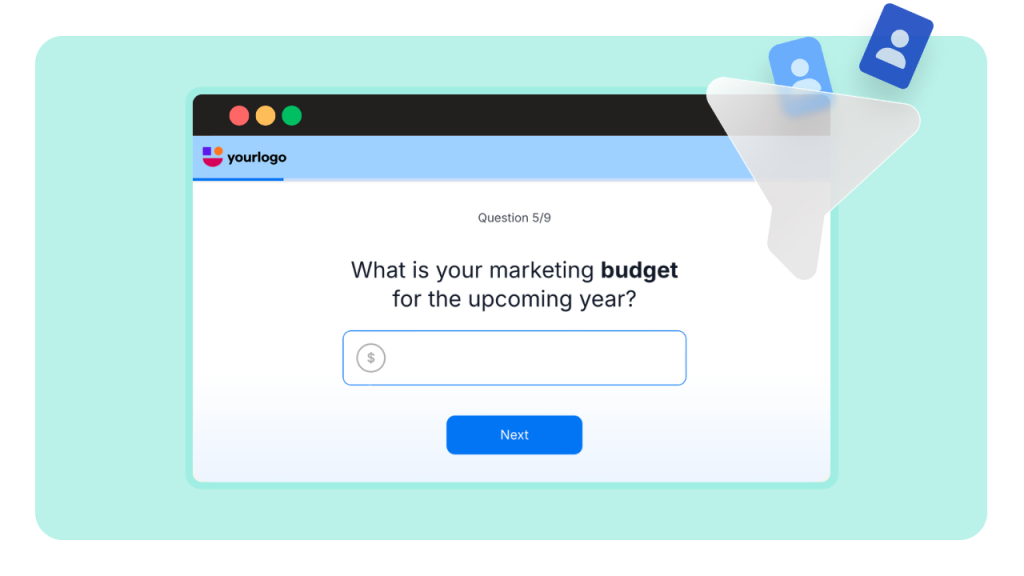
A lead qualification framework is a structured methodology that helps sales teams evaluate potential customers based on specific criteria, determining which prospects are worth pursuing and which should be deprioritized. These frameworks transform subjective assessments into systematic, data-driven decisions that directly impact revenue generation and sales efficiency.
This guide covers the major qualification frameworks, including BANT, MEDDPICC, CHAMP, FAINT, and ANUM, along with implementation strategies and selection criteria. It’s designed for sales professionals, marketing teams, and business owners who want to optimize their sales process and stop wasting time and resources on unqualified leads. Whether you’re building your first qualification process or refining an existing approach, understanding these frameworks is essential for predictable pipeline growth.
In short, lead qualification frameworks are systematic approaches that help sales reps evaluate prospects based on specific criteria like budget, authority, need, and timeline to focus efforts on leads most likely to become paying customers. Companies using structured frameworks typically see 20-30% higher conversion rates compared to ad-hoc qualification methods.
By the end of this guide, you will:
Understand the core components that make qualification frameworks effective
Know the strengths and limitations of each major sales qualification framework
Learn how to select and implement the right framework for your business
Discover how interactive tools can automate and enhance your lead qualification process
Gain practical solutions for common qualification challenges
Understanding Lead Qualification Frameworks
A lead qualification framework provides a repeatable structure for evaluating whether a potential customer is a good fit for your product or service. Rather than relying on intuition, these frameworks establish clear criteria that every sales lead must meet before progressing through the sales process.
The distinction between structured frameworks and ad-hoc methods is important. Without a framework, salespeople "waste" valuable time on prospects who lack budget, authority, or real need. Structured qualification ensures consistency across your sales team, creates shared language between marketing and sales departments, and enables accurate pipeline forecasting.
Core Components of Qualification Frameworks
Most qualification frameworks assess some combination of four fundamental elements:
Financial resources: can they afford it?
Decision-making authority: can they approve the purchase?
Genuine need: does your solution address their pain points?
Timing: when will they make a purchasing decision?
These components exist in every framework, though different frameworks prioritize them differently. Some start with budget allocated discussions, others begin with challenges. The sequence matters because it shapes the qualification conversation and influences how prospects perceive your approach.
Benefits of Using Structured Frameworks
Implementing a sales qualification framework delivers measurable improvements in sales efficiency. When your sales team can quickly identify high-quality leads, they close more deals by focusing on prospects with real buying potential.
Framework-driven qualification also improves resource allocation between marketing and sales. Clear definitions of marketing-qualified leads (MQLs) versus sales-qualified leads (SQLs) prevent handoff friction, a problem that renders up to 50% of leads unworkable according to industry research.
Additionally, frameworks enable pipeline predictability, with structured qualification yielding 2-3x improvement in revenue forecasting accuracy.
Qualify leads with involve.me
Filter, score, and qualify leads automatically with interactive funnels
Popular Lead Qualification Frameworks
Understanding the available frameworks is the first step toward choosing one that matches your sales cycle and target market. Each sales framework evolved to address specific selling environments. The right choice depends on your sales cycle complexity, average deal size, and how your prospects typically make purchasing decisions.

BANT Framework (Budget, Authority, Need, Timeline)
The BANT sales framework, developed by IBM in the 1950s, remains the most widely adopted qualification methodology.
BANT focuses on four questions:
Budget: Does the prospect have budget for the solution?
Authority: Are you speaking with the right person who has decision-making authority?
Need: Does your offering address a genuine need?
Timeline: What’s their timeline for making a decision?
Best for: BANT works best for transactional sales with shorter cycles and clearly defined budgets. It excels at quick disqualification, helping sales reps rapidly filter out prospects who aren’t worth pursuing.
Drawbacks: BANT focuses on criteria that assume prospects already know their budget, which rarely applies in consultative selling environments where solutions and needs evolve through discovery.
MEDDPICC Framework (Metrics, Economic Buyer, Decision Criteria, Etc.)
MEDDPICC represents a comprehensive qualification approach designed for complex enterprise sales.
The framework examines:
Metrics (quantifiable value your solution delivers)
Economic Buyer (the person with P&L responsibility)
Decision Criteria (technical and financial evaluation standards)
Decision Process (approval workflows involving multiple stakeholders)
Paper Process (contract and procurement requirements)
Identify Pain (core business objectives at risk)
Champion (your internal advocate)
Competition (rival vendors in the evaluation)
Best for: This framework excels when deals involve multiple stakeholders and lengthy decision-making processes. Companies using MEDDPICC in complex sales report 15-25% higher win rates by precisely identifying economic buyers and mapping organizational structure early.
Drawbacks: The trade-off is implementation complexity; MEDDPICC requires significant sales maturity and extensive discovery calls.
CHAMP Framework (Challenges, Authority, Money, Prioritization)
The CHAMP qualification framework reorients the qualification process by starting with the prospect’s challenges rather than budget.
CHAMP stands for:
Challenges (what specific challenges is the prospect facing?)
Authority (who influences and approves purchasing decisions?)
Money (does the company have financial resources to invest?)
Prioritization (where does solving this problem sit on their priority list?)
Best for: This approach aligns naturally with consultative selling, where buyers begin their purchasing process by identifying problems rather than allocating budget. By leading with the lead’s challenges, sales professionals build credibility as problem-solvers rather than quota-chasers. The CHAMP framework is particularly effective in competitive markets where differentiation comes through understanding prospect pain points.
FAINT and ANUM Frameworks
The FAINT framework emerged as an alternative for qualifying early-stage leads who may not have a formal budget allocated.
FAINT assesses:
Funds (does the organization have access to money, even if not budgeted?)
Authority
Interest (is there genuine engagement?)
Need
Timing
Best for: This approach works well for selling innovative solutions where prospects haven’t yet planned to allocate funds.
The ANUM sales framework assesses:
Authority
Need
Urgency
Money
Best for: By front-loading the authority question, ANUM helps sales reps quickly identify whether they’re engaging the right person before investing in deeper discovery.
Both frameworks represent adaptations of BANT for different selling contexts, and comparing them with other qualification frameworks helps identify the best fit for your current process.
Understanding these options prepares you to implement the framework most suited to your sales environment.
Implementing Lead Qualification Frameworks
Selecting a framework is only the beginning. Successful implementation requires systematic rollout, training, and continuous optimization based on actual results.
Step-by-Step Implementation Process
Before implementing structural changes, assess your current process to identify gaps. Here’s an implementation sequence you can follow:
Audit your existing qualification approach: Document how your sales team currently qualifies leads, identifying inconsistencies and lost sales due to poor qualification.
Select the appropriate framework: Match framework complexity to your sales cycle; BANT for transactional sales, MEDDPICC for enterprise, CHAMP for challenge-led positioning.
Create standardized qualification templates: Develop qualifying questions mapped to each framework component that sales reps can use consistently.
Train your entire revenue team: Ensure both marketing and sales understand the framework, lead definitions, and handoff criteria.
Monitor, measure, and optimize: Track conversion rates at each stage, identifying where qualified leads drop off and refining criteria accordingly.
Framework Selection Criteria
Choosing between qualification frameworks requires matching your methodology to your selling reality:
Criterion | BANT | MEDDPICC | CHAMP | FAINT |
Best for sales cycle | Short (< 30 days) | Long (3-12 months) | Medium (30-90 days) | Variable |
Deal complexity | Low | High | Medium | Low-Medium |
Stakeholder count | 1-2 | 6-10+ | 2-5 | 1-3 |
Primary focus | Budget first | Economic buyer | Lead’s challenges | Funds availability |
Team experience needed | Entry-level | Advanced | Intermediate | Entry-level |
For teams selling products with established categories and clear pricing, BANT provides efficient gatekeeping. Organizations navigating complex purchasing decisions typically benefit from MEDDPICC’s depth. Companies focused on consultative selling often find the CHAMP framework aligns with their sales methodologies.
Modern tools can significantly enhance whichever framework you choose by automating qualification data collection.
How involve.me Enhances Lead Qualification
involve.me, the AI quiz funnel builder with built-in email automation, turns lead qualification into an automated, interactive experience: it gathers qualification data with a quiz or assessment, then automatically sends the follow-up sequence, so prospects arrive warm before they ever speak with sales.
Interactive Lead Qualification Tools
The platform builds dynamic qualification funnels using quizzes, assessments, calculators, product recommendation flows, landing pages, and forms that engage prospects while systematically capturing framework-specific data.
Unlike static contact forms that collect minimal information, involve.me’s interactive experiences use logic jumps and conditional questions to adapt the qualification path based on responses.
For example, a prospect indicating “Enterprise” company size automatically receives questions about decision making processes and multiple stakeholders, while a small business lead sees simplified qualification flows. This branching logic mimics the depth of GPCTBA/C&I discovery conversations without requiring sales rep time.
Real-time lead scoring assigns point values to responses, automatically qualifying or disqualifying leads based on your framework criteria. For example, a prospect selecting a budget range above your threshold, indicating purchase timing within 90 days, and confirming decision maker status can be instantly tagged as sales-qualified and routed appropriately.

Key Advantages of involve.me for Lead Qualification
No-code Platform for Rapid Deployment
Use it to build and modify qualification funnels without developer involvement, so you can iterate fast as you refine criteria.
AI-powered Funnel Creation
Describe the qualification funnel you need and the AI Agent builds it, suggesting question sequences that maximize completion rates while gathering comprehensive framework data.
Built-in Email Automation and Integrations
Involve.me Automatically Sends the Follow-up Sequence to Qualified Leads Based on Their Answers and Scores. For Teams Already in HubSpot or Salesforce, 50+ Native Integrations Sync the Contact with All Qualification Data Attached, So Reps Have Full Context Before First Contact.
Advanced Analytics and Conversion Tracking
Dashboards reveal exactly where prospects drop off, which questions create friction, and how qualification criteria correlate with eventual closed deals, enabling continuous framework optimization.
Personalization for Improved Engagement
Dynamic content based on responses creates personalized experiences that boost completion rates 5x compared to static forms, meaning you qualify more leads from the same traffic. Users can also be guided through different paths and sent to custom outcomes based on their qualification level.

Framework Integration Capabilities
involve.me supports the implementation of any qualification framework through customizable question templates. Build BANT qualification using budget range sliders, authority role selectors, need assessment questions, and timeline date pickers.
Implement CHAMP by leading with challenge-identification questions before progressing to authority and money discussions.
Custom branding options ensure your qualification funnels match your company’s professional presentation while gathering the data your sales qualification framework requires.
These capabilities directly address the most common qualification challenges organizations face.
Qualify leads with involve.me
Filter, score, and qualify leads automatically with interactive funnels
Common Lead Qualification Challenges and Solutions
Even with the right framework selected, implementation challenges can undermine qualification effectiveness. Here are practical solutions for the obstacles most sales teams encounter.
Low Response Rates to Qualification Questions
Solution: Replace lengthy static forms with interactive qualification experiences. Quizzes and calculators engage prospects by providing immediate value, a cost savings estimate, a fit score, or personalized recommendations, in exchange for qualification data. involve.me users typically see 3-5x higher completion rates compared to traditional form submissions.
Inconsistent Framework Application
Solution: Standardize qualification through automated workflows that enforce consistent criteria regardless of which sales rep handles a lead. When qualification questions are embedded in interactive funnels, every lead answers the same framework-aligned questions, creating uniform data quality across your pipeline.
Poor Lead Data Quality
Solution: Progressive profiling and conditional logic ensure comprehensive data collection without overwhelming prospects. Rather than asking all qualifying questions upfront, gather information across multiple touchpoints based on prospect engagement. Conditional logic skips irrelevant questions, reducing friction while maintaining data depth.
Framework Selection Confusion
Solution: A/B test different frameworks to identify what works for your specific target market and product or service. Use analytics to compare conversion rates, sales cycle length, and revenue generated from leads qualified under different criteria. Data eliminates guesswork from framework selection.
These solutions require both the right tools and organizational commitment to consistent qualification practices.
Conclusion and Next Steps
Lead qualification frameworks transform the sales process from reactive lead-chasing into proactive prospect evaluation. Whether you implement the straightforward BANT approach, adopt MEDDPICC for complex enterprise sales, or lead with challenges using CHAMP, a structured framework ensures your sales team focuses on prospects most likely to become paying customers.
The key is matching framework complexity to your actual selling environment, then implementing consistently with tools that automate data collection and enforce qualification standards.
Immediate action steps:
Audit your current lead qualification process to identify where unqualified leads waste sales resources
Select a framework that matches your sales cycle complexity and buyer decision-making process
Build interactive qualification funnels using involve.me to automate data collection and scoring
Train your team on framework criteria and ensure alignment between marketing and sales
Measure conversion rates and iterate on qualification criteria based on closed-deal data
For organizations ready to advance further, explore topics like CRM-integrated lead routing, predictive lead scoring using behavioral data, and account-based qualification strategies for targeting specific high-value prospects.
Start qualifying leads with a template

Appointment Funnel Template

Price Quote Generator Template

B2B Lead Magnet Template
Sources
The Basics of Outbound Lead Generation Set-Up - LUNAS
Essential steps to accelerate your lead generation in 2026. - the telemarketing company
B2B sales lead generation: proven strategies for 2026 - monday.com
5-Point Lead Qualification Checklist Every Salesperson Should Follow in 2026 - Sparkle.io


