Three ways involve.me users turned their funnel around, and how to do the same

Real transformations, from users who published a funnel and weren't seeing the results they wanted. Each one found a different fix. Pick the one that sounds like your situation.

Pipeline Health Check

A business coach for independent consultants · After 60 days
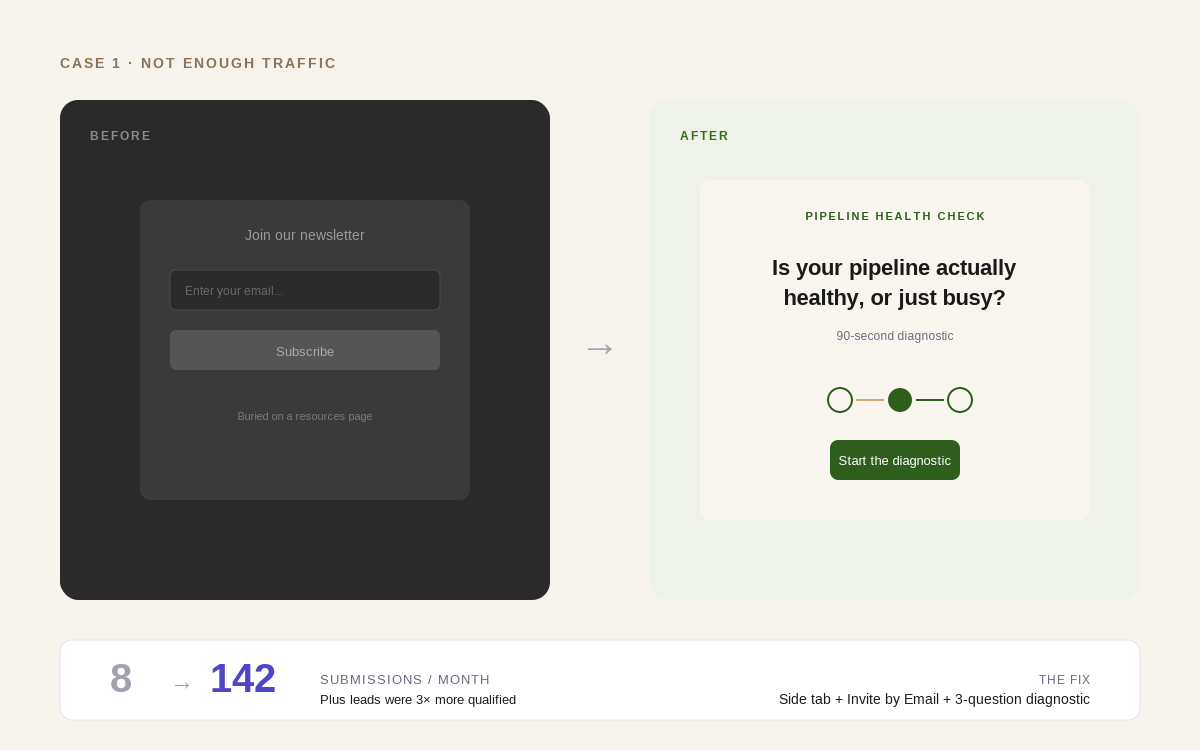
Pipeline health check use case.

She had a solid lead magnet, a weekly client pipeline review template her audience actually wanted. The problem wasn't the offer. It sat on her resources page getting fewer than 10 downloads a month. The funnel underneath was a plain email form that gave her no context on who the lead was or why they signed up.

First, she changed distribution. She turned on the side tab embed across her blog, so every reader of her weekly article saw a visible, low-pressure way to engage. Submissions went from 8 to about 40 a month over three weeks, with no change to the funnel itself.

Then she changed the funnel. She rebuilt it as a 3-question diagnostic. Pipeline volume, close rate, lead source, before the email ask. Submissions jumped to 142 a month, and each one arrived with context so she could tell at a glance who was worth a call.

Last, she changed what happened after submission. She built a workflow in involve.me that routed each lead into one of three email sequences based on their diagnostic score. All automation ran inside involve.me, with no push to HubSpot and no Zapier handoff. By the time she opened a lead, they'd already warmed up on their specific problem.

After 60 days: 142 submissions a month, close rate on booked calls tripled, and she stopped exporting leads to a separate ESP entirely.
Retirement readiness calculator

An independent financial advisor · After 90 days

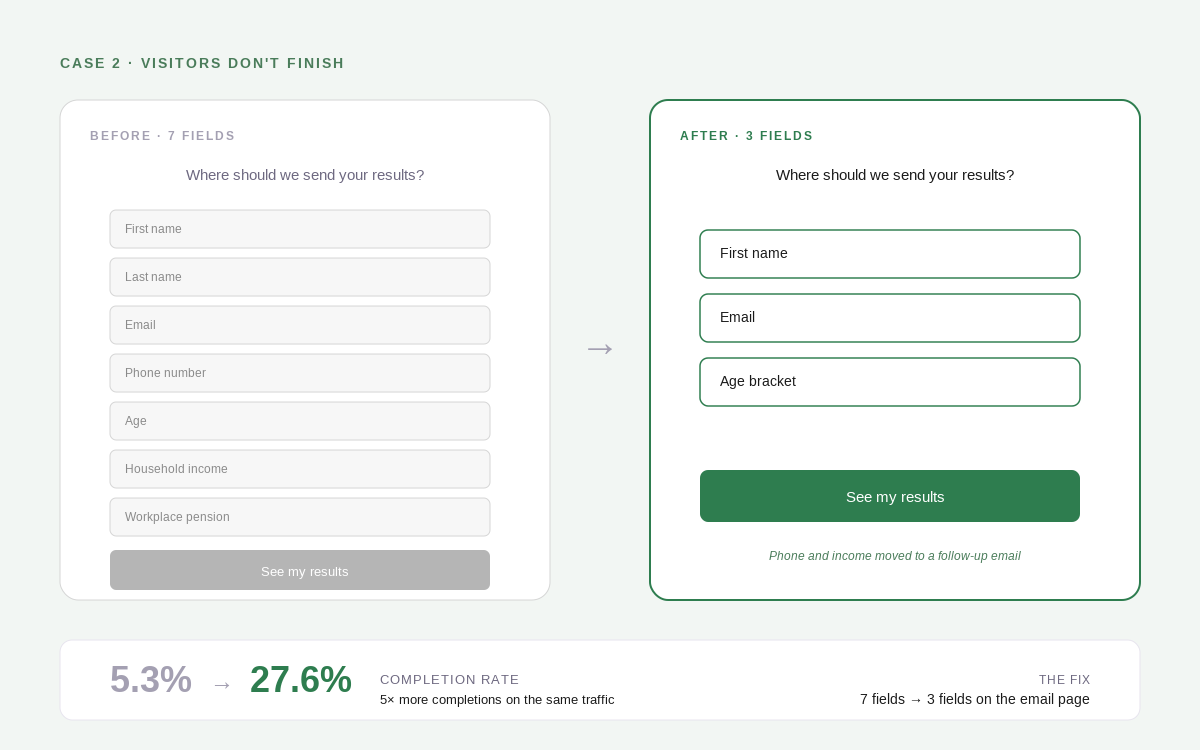
Retirement readiness calculator use case.

His calculator was getting about 340 visits a month from Google Ads and his newsletter. Only 18 people a month actually finished it. The audience was interested. They just didn't want to hand over their phone number and household income to see a readiness score.

First, he cut the email page from seven fields to three. First name, email, age bracket. Phone number and income moved to the result page as "optional, if you'd like a more detailed report." Completion jumped from 5.3% to 27.6% in two weeks. Same traffic, same funnel.

Then he gave the score a next step. The calculator produced a readiness score, but it had been informational only. Using Answer-based Outcomes, he routed each submission to one of three result pages (On track, Needs attention, Significant gap), each with a specific action, not a generic "book a call."

Last, he used the involve.me CRM to prioritize outreach. Every submission landed tagged with its score. His Monday outreach list filtered by the "Significant gap" tag, so he called those contacts first while the result was fresh. The "Needs attention" group dropped into an automated email sequence covering the three most common blockers.

After 90 days: completion rate 27.6% (up from 5.3%), close rate on priority-tagged leads up significantly, and he stopped maintaining a separate spreadsheet of who to follow up with when.

Product recommendation quiz

A direct-to-consumer skincare brand · After 60 days

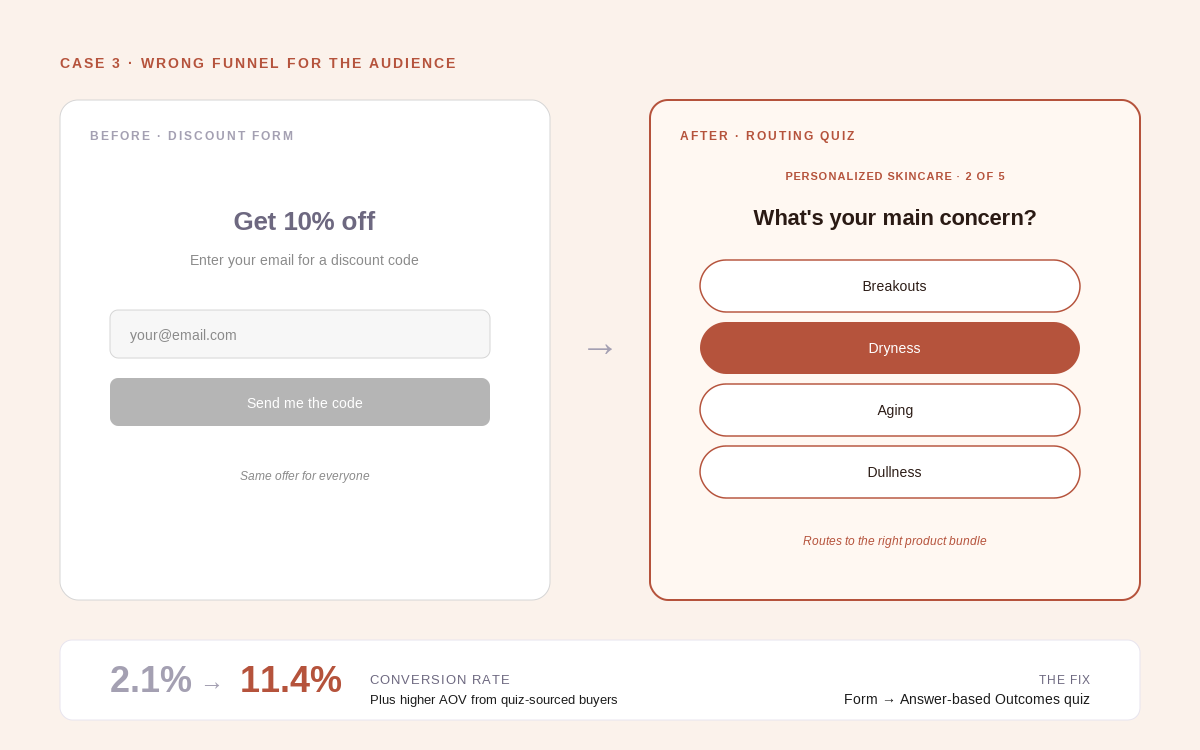
Skincare product recommendation quiz use case.

The brand had run an "Enter your email for 10% off" form on the site for a year. It worked, 2.1% of visitors converted. But the brand was leaving two things on the table. Everyone got the same discount code, and nobody got anything after that first order.

First, the team replaced the form with a quiz. A 5-question routine finder: skin type, main concern, routine frequency, age, fragrance preference. The email ask moved to the end, framed as "where should we send your routine?" Conversion jumped from 2.1% to 11.4% in a month.

Then they routed to real recommendations. Using Answer-based Outcomes, each submission routed to one of four bundles (Clear Skin, Hydration, Age-Defy, Sensitive Soothing). The result page showed the recommended products with "shop this routine" buttons that linked through to Shopify with items pre-added to cart.

Last, segmented follow-up by outcome. Each bundle had its own 4-email sequence running from involve.me's built-in automation, tailored to that skin concern. The Shopify integration passed purchase events back, so buyers rolled into a post-purchase sequence automatically and non-buyers kept getting routine-specific education.

After 60 days: quiz conversion 11.4% (up from 2.1%), average order value from quiz-sourced buyers 40% higher than from the old form, and email revenue grew for the first time since the brand launched.