
“57% of US small employer firms name reaching customers and growing sales as an operational challenge, the most common answer.”
This shows the importance of inbound lead generation methods in fostering business growth and improving customer engagement.
This article reveals the top inbound lead generation strategies that can help organizations efficiently attract and nurture quality leads.
What Is Inbound Lead Generation?
Inbound lead generation is the process of attracting people who come to you on their own, through content, search, social media and interactive tools, and turning them into leads by offering something worth their contact details. Inbound lead generation campaigns focus on attracting loyal customers through content and interactions that are helpful and relevant, rather than intrusive. This approach leverages various forms of pull marketing, such as blogs, SEO, social media marketing and online forms that boost conversions to create brand awareness and attract new business.
“Calls to 88,927 UK businesses picked from the official register led to an interview 3.8% of the time. Among businesses that had agreed to be called again, 54% took part.”
This gap is largely due to the non-disruptive nature of inbound lead generation, which aligns with the modern consumer's preference to engage voluntarily with brands.
What Are Inbound Leads?
Inbound leads are people who find you and raise their hand: they fill in a form, take a quiz, request a quote or start a chat. They arrive at different stages:
Marketing qualified leads (MQLs): engaged with your content, for example by downloading a guide or joining a webinar, but not ready to buy yet.
Sales qualified leads (SQLs): actively comparing options and ready for a conversation with sales.
Product qualified leads (PQLs): tried your product, for example in a free trial, and now consider buying.
Service qualified leads: asked for your service directly, through a contact form, a quote request or a chat.
The Inbound Lead Generation Process: Attract, Convert, Close, Delight
Attract: bring in the right visitors with content, search and social posts. A quiz or calculator that gives a useful result is easy to share and draws clicks back to your site.
Convert: ask for contact details in exchange for that result, a guide or a quote. Multi-step forms, quizzes and calculators collect more context than a single form, and email and phone validation keep the data clean.
Close: score each lead by their answers and pass the high scores to sales with the context they need for the first call.
Delight: keep customers engaged after the sale with onboarding emails, feedback and NPS surveys, so they come back and refer others.
Inbound Vs. Outbound Lead Generation
The distinction between inbound and outbound lead generation is significant, primarily reflected in both cost and effectiveness. Inbound lead generation strategies involve attracting ideal customers with useful content and interactions, while outbound strategies typically involve reaching out to consumers directly, often through less targeted means such as cold calling or mass advertising.
“In a 2026 survey of financial planning practices, outbound prospecting cost $2.53 for each $1.00 of new client revenue, against $0.45 for SEO and $0.34 for client referrals.”
This cost-effectiveness makes inbound lead generation an essential strategy for businesses looking to optimize their marketing budgets and improve their ROI.
Top Inbound Lead Generation Strategies
Let’s have a look at some of the best inbound lead generation tactics. The lead generation hub has more guides on channels and strategies.
1. Create Lead Funnels
Lead funnels serve as the critical conversion points in inbound marketing, where visitors engage directly by providing their information through various types of online forms. These forms not only facilitate the capture of essential lead data but also enhance personalized marketing efforts, thereby boosting conversion rates. Here are some types of multi-step forms used in lead funnels:
Payment Forms: Capture transactions and can also be used for upselling or cross-selling.
Registration Forms: Used for signing up for events or memberships, gathering detailed information about the lead.
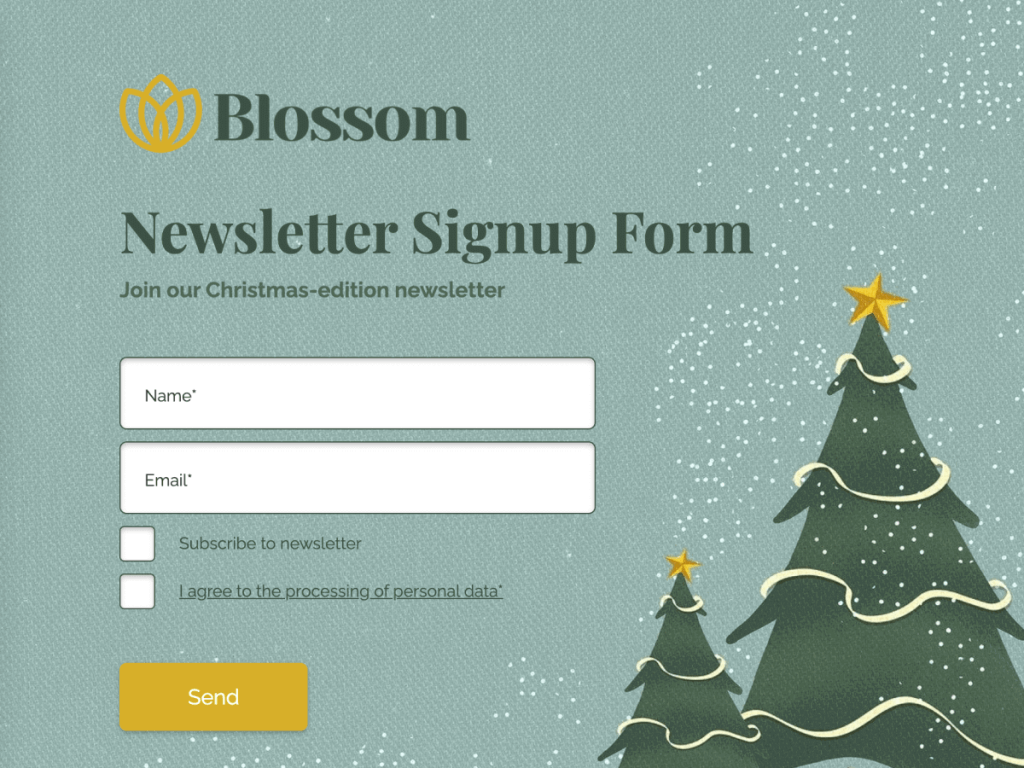
Sign-Up Forms: Commonly used for subscribing to newsletters or other recurring content.
Subscription Forms: For services or products that require ongoing commitment, such as software as a service (SaaS).
Best Practices for Form Design
Simplicity: Keep the form as simple and concise as possible to increase the likelihood of completion.
Engaging CTAs: Use clear and compelling calls to action that convey the value of what you’re offering in exchange for their information.
Minimal Fields: Limit the number of fields to only what’s necessary to reduce friction and increase conversion rates.
Pro tip: Integrate online forms with email marketing tools and CRM systems to automate follow-up with email sequences. This ensures that no leads fall through the cracks and that each lead is properly managed throughout the sales funnel.
Salesforce uses various types of online forms effectively across their platform to capture lead information, which is then funneled into their CRM system for efficient lead tracking and management. This integration helps in delivering personalized experiences to their prospects.

You can also build lead capture funnels easily using involve.me, the AI quiz funnel builder with a built-in CRM and email automation, which offers free customizable templates and automatically sends a follow-up email sequence after each submission (not on every plan).
Create Your Own Online Forms
Get Started with 300+ Templates

Request Collection Form for Real Estate Template

Employee Evaluation Form Template Template

Consultation Scheduling Form Template

Recruiting Form for Solar Panel Installation Company Template

Business Consultancy Appointment Template

Tenant Qualification Form Template
Alternatively, use involve.me’s AI form generator to create forms tailored to your specific needs. Just give a prompt, for example "A lead funnel for a solar installer that asks about roof type, monthly electricity bill and timeline, then collects name and email", and click generate!
2. Content Marketing
Content marketing is a strategic approach focused on creating and distributing valuable, relevant, and consistent content to attract and retain a clearly defined audience and, ultimately, to drive profitable customer action. In terms of lead generation, content marketing strategy helps to establish authority, build trust, and maintain engagement with potential and current customers, guiding them through the buying process. Examples of effective content types include:
Blogs: Provide regular, timely content that addresses industry trends, solutions to common problems, and other interests of your target audience.
eBooks: Offer comprehensive guides on specific topics that require more in-depth exploration than a blog post.
Whitepapers: Serve as authoritative reports or guides that inform readers about complex issues and present the issuing body's philosophy on the matter.
HubSpot excels in content marketing by offering a vast array of free resources, including blogs, detailed guides, and reports that cater to various aspects of digital marketing. Their content not only educates but also draws users into their lead generation funnel by encouraging them to subscribe for more valuable resources.

3. Social Media Engagement
Social media platforms serve as vital channels for interacting with target customers and generating leads. They allow businesses to reach a broader audience, engage with users in real-time, and gather insights into consumer behaviors and preferences.
Strategies for Using Different Platforms
Facebook: Ideal for a broad demographic, useful for sharing a mix of content types from videos to detailed posts.
LinkedIn: Best for B2B companies, focusing on professional and valuable content and networking.
Instagram: Great for visual content, reaching younger demographics with images and stories to engage users.
Coca-Cola effectively uses various social media platforms to engage with their prospective audience. Their inbound lead generation efforts are often tailored to the specific features of each platform, which helps them in driving brand awareness and engaging potential customers through compelling content and discussions.

Encourage user-generated content. Posts, photos and reviews that customers share on their own carry more credibility than anything you publish yourself. Give customers a reason to tag you, share their posts with permission, and let that social proof bring new visitors to you.
4. Webinars and Online Workshops
Webinars and online workshops are powerful lead generation tools because they allow businesses to engage directly with a targeted audience in real-time. They offer a platform to demonstrate expertise, discuss industry trends, or provide training, which can attract individuals who are interested in the specific topics presented. This targeted engagement increases the likelihood of attracting high-quality leads who are further along in the buyer's journey.
Steps to Organize a Successful Webinar
Topic Selection: Choose a topic that is not only relevant and engaging to your target audience but also showcases your company’s knowledge and strengths.
Promotion: Use multiple channels to promote your webinar, including email marketing, social media, and even paid advertising. The goal is to maximize reach and registration.
Follow-Up: Take registrations through an involve.me form and send every email from one Email Automation workflow. It starts on Completed Submission and sends the confirmation right away, then two Wait Time steps, each set to a specific date and time, send a reminder before the session and the recording after it, with additional resources related to the topic and a call to action to engage further with your brand.
Neil Patel frequently uses webinars to engage with their audience. They cover a range of topics from inbound marketing tactics to specific product demonstrations. These webinars serve as both educational tools and lead generation mechanisms, as participants must register using their contact details, which Neil Patel then uses to follow up with each registrant.

5. Search Engine Optimization (SEO)
SEO is critical for any digital marketing strategy because it helps your website gain higher visibility in search engine results, driving more organic (non-paid) traffic. This traffic is often more sustainable and cost-effective in the long term compared to paid advertising. More importantly, users coming from organic search are typically looking for something specific, making them well-qualified leads.
Key SEO Tactics for Improving Website Ranking and Visibility
Keyword Research: Identify relevant keywords that your potential leads are searching for according to your services or products.
Link Building: Focus on acquiring high-quality backlinks from reputable sites. Backlinks are a major factor in how search engines rank your site.
On-Page Optimization: Ensure that your website is optimized for both search engines and users. This includes optimizing title tags, meta descriptions, and headers, and ensuring your site is mobile-friendly.
You can use tools like Google Analytics and Google Search Console to track how well your SEO efforts are performing. These tools can provide insights into metrics such as page views, traffic sources, and rankings. Regular analysis allows you to refine your strategies, focusing on what works best for driving traffic and converting leads.
Moz is renowned for its SEO products and community resources. They effectively use SEO not just to promote their tools but also to educate the market on best practices through their highly optimized blog posts and training resources. Their ability to rank higher for key SEO-related terms draws organic traffic, which they convert into leads through free trial offers and downloadable content.

6. Targeted Landing Pages
Creating targeted landing pages is a vital inbound lead generation strategy tailored to different segments of your audience. Align your content and offers on these pages with specific user interests and needs, and you effectively attract and generate quality leads.
These pages play a critical role in converting visitors into qualified leads, using inbound marketing channels to maximize reach. It’s essential to include compelling lead magnets on these pages, which act as a trade for visitor information, moving them down the sales process. See lead generation landing page examples for layouts that work.
Key Components:
Personalization: Use data-driven insights to personalize content, offers, and call-to-actions (CTAs) based on visitor behavior and demographic information.
SEO Optimization: Integrate relevant keywords to ensure these landing pages rank well in search results, drawing organic traffic.
Clear CTAs: Include compelling and clear calls to action that guide visitors towards becoming leads, such as signing up for a webinar, downloading a whitepaper, or requesting a demo.
7. Lead Scoring and Email Sequences
Lead scoring and email sequences are central to any inbound marketing strategy: the score shows which leads are ready for sales, and an email sequence keeps every other lead engaged until they are.
Businesses can prioritize a sales qualified lead based on the likelihood to become a paying customer by assigning values to various interactions and behaviors. This lead generation strategy helps the sales and marketing teams focus their efforts on leads most likely to close, ensuring a higher conversion rate from marketing qualified leads to sales qualified leads.
Scoring also takes over the screening that someone would otherwise do by hand. In a thread on r/sales about a company that cut its entire 100-person inbound team, one commenter put it this way:
“100 people that just scan form submissions, check ICP, and then forward it to an appropriate sales rep? yes it makes sense that actual salespeople wouldn’t need SDRs since AI or even basic coding can qualify via form submission. the hard part is talking to the customer and closing the deal, AI currently sucks at that.”
How It Works
By assigning scores to different types of interactions (e.g., website visits, downloads, webinar attendance), companies can gauge a lead's interest level and readiness to buy.
Many businesses still judge that readiness by hand. In a 2024 survey of 322 B2B companies in Switzerland, Germany and neighboring countries, run by the ZHAW Zurich University of Applied Sciences, 45% said they spot contacts who are ready to buy by following up manually, 28% read it from website behavior such as page visits and downloads, and 15% said they do not recognize them at all.
Key Components:
Email Sequences by Score: Build the follow-up as an Email Automation workflow that starts on Completed Submission and sends the first email right away. Conditional Logic on the lead’s score (lead scoring is not on every plan) then gives each score band its own email sequence, with Wait Time between the emails, so every lead gets information that matches their place in the sales funnel. Leads above your sales threshold go to a sales rep through Change Assignee, and a second Conditional Logic step on email clicks sends anyone who clicks your pricing email down the same path.
Regular Updates: Continuously refine scoring criteria based on feedback from the sales team and conversion rates, ensuring alignment with changing market conditions and consumer behaviors.
8. Educational Webinar Series
Educational webinar series serve as an effective method for generating inbound leads by providing valuable content that addresses specific customer needs and challenges. This approach not only helps in generating inbound leads but also positions your brand as a thought leader in your industry.
The webinars are a strategic tool to engage directly with a targeted audience, making them more likely to transition from an interested prospect to a service qualified lead. Effective follow-up after each session can further generate leads and enhance conversion rates, turning an attendee into a paying customer.
How It Works
Regularly scheduled webinars attract a steady stream of new and returning participants who are interested in learning more about their field. This not only helps in generating leads but also in advancing them from being aware to considering your solutions seriously.
Key Components:
Expert Speakers: Involve industry experts or thought leaders to speak at your webinars, enhancing the credibility and appeal of your sessions.
Follow-up Strategy: Add one or two questions to the registration form, such as the attendee’s biggest challenge and how soon they plan to act, and let the answers shape the follow-up after each session. In the Email Automation workflow, Conditional Logic sends each group resources on their challenge and Invite to Funnel sends the registration for the next session. Registrants who plan to act soon go to a sales representative through Change Assignee, and a Send Internal Email asks that rep to offer a consultation. This can move leads further along in the sales process.
9. Quiz Funnel Strategy
A quiz funnel is an innovative marketing approach that uses quizzes to engage potential customers. These quizzes are designed to both entertain and gather insights about the participants, enabling businesses to categorize respondents based on their answers.
This segmentation allows for tailored marketing strategies that can address specific customer needs and preferences, making the approach highly effective for nurturing each segment with its own email sequence through the sales funnel. The quiz funnel build guide shows how to set one up.
Implementing a Quiz Funnel
To create a quiz funnel, a business first needs to define the objective of the quiz, such as increasing engagement, qualifying leads, or gathering customer data. The next step involves designing engaging and relevant questions that align with the identified objectives.
The quiz should conclude with a call-to-action, prompting participants to enter their contact information in exchange for their quiz results. This transforms the quiz from a simple engagement tool into a powerful lead generation mechanism.
Using involve.me
involve.me is the AI quiz funnel builder with a built-in CRM and email automation, best for businesses where every qualified lead is worth hundreds or thousands of dollars. It turns website visitors into qualified leads with quizzes, assessments, calculators, product recommendation flows, and landing pages, then automatically sends the follow-up email sequence based on each lead’s answers and score.
The platform features a powerful drag-and-drop editor that allows users to build multi-step funnels using a combination of form, quiz, calculator, and survey elements. These elements work together to engage users, gather lead information, and drive them toward personalized outcomes, all while automatically profiling and qualifying leads in the background.
With a growing library of 300+ pre-built templates, the AI Agent, deep personalization tools, and over 50 native integrations, involve.me offers businesses a comprehensive toolkit to match almost any use case or campaign goal.
Whether creating product finders, price quote calculators, engaging lead magnets, or appointment forms, involve.me enables businesses to create on-brand, responsive, and high-converting experiences. The platform is fully GDPR-compliant and designed to scale with companies of all sizes.
10. Customer Referral Program
A customer referral program is a strategy that relies on existing customers to refer new potential leads to a business. By using the networks of current customers, companies can tap into new customer bases that come with a pre-established level of trust and credibility, which can significantly enhance the effectiveness of the program.
Referrals stay the first route in markets where trust is hard to judge. In a July 2026 Citizens Advice survey of more than 3,000 UK adults who had hired a trader for home repairs or improvements, 36% had found that trader through a referral from someone they knew and 27% had hired them before, against 16% who used a recommendation site and 11% who used social media.
Setting Up a Referral Program
To set up an effective referral program, businesses need to determine the incentives for both the referrer and the referee.
These incentives could be discounts, free products, or access to exclusive services. Clear communication of the program’s benefits is crucial to encourage participation.
Additionally, the process for referring others and claiming rewards should be as simple and straightforward as possible to ensure high engagement.
Here is a refer a friend form template to click through and adapt:
Managing and Optimizing the Program
Maintaining an effective referral program requires ongoing management and optimization. Regularly assessing the performance of the program and making adjustments based on customer feedback and participation rates is essential. Employing tools to track referrals and conversions can help businesses understand the ROI of their referral efforts and refine their strategy accordingly.
How to Manage and Qualify Inbound Leads
Attracting inbound leads is half the work. The other half is handling them fast and in the right order:
Score every lead. Give points for fit (role, company size, budget) and for intent (pages visited, content downloaded, answers in a quiz or calculator). In involve.me, answer values add up to a score as people complete the funnel, and Score-based Outcomes give each score band its own result page.
Keep every lead in one place. A CRM holds contact details, answers, scores and every touchpoint. involve.me has a built-in CRM and also syncs leads to the tools you already use through its integrations.
Segment by answers. Group leads by industry, company size, buying stage or budget, and tailor the follow-up to each group. A pricing calculator, for example, sorts leads by budget the moment they submit.
Follow up within minutes. An email automation workflow starts on every completed submission: it sends the first email right away, waits, and branches by score or outcome with Conditional Logic. High scores trigger a Send Internal Email to sales, and everyone else gets an email sequence that matches their answers.
Agree on the handoff. A service level agreement between marketing and sales sets what makes a lead sales-ready, who follows up and how fast.
Lead scoring and email automation are not on every plan.
The tutorial below builds that follow-up as an Email Automation workflow: it starts when someone completes a form, sends different emails based on the answers, waits, and branches on whether the first email was opened, in about nine minutes.
7 Inbound Lead Generation Tools to Try
1. involve.me
involve.me stands out as a versatile funnel builder designed to attract and qualify leads, ultimately boosting conversions through personalized interactions. The platform allows marketers to create and deploy content such as quizzes, surveys, and calculators, which are highly engaging and effective at capturing user data. Using this platform, businesses can craft unique customer journeys that adapt based on user input, leading to higher engagement and more precise lead qualification. The tool's integration capabilities with CRM systems and marketing platforms ensure that every lead can be nurtured according to their specific needs and behaviors, maximizing the chances of conversion.

2. HubSpot
HubSpot is renowned for its comprehensive suite of tools that support every facet of inbound marketing, from content management and social media marketing to lead management and analytics. Its CRM is particularly robust, providing deep insights into lead interactions that enable highly targeted marketing strategies.
HubSpot also offers automation features that streamline complex marketing campaigns, making it easier for businesses to nurture leads at scale. With its user-friendly interface and extensive integration options, HubSpot is a one-stop-shop for businesses looking to enhance their inbound marketing efficacy.
3. Moz Pro
Moz Pro is a critical tool for search engine optimization, providing users with the resources necessary to improve their website's visibility and organic reach. It offers features such as keyword research tools, SEO audits, and link analysis that are essential for crafting effective SEO strategies.
Moz Pro also includes competitor analysis tools, allowing marketers to gauge their positioning in the market and adjust their strategies accordingly. This tool is invaluable for businesses looking to drive more targeted traffic to their sites and improve their search engine rankings.
4. Mailchimp
Mailchimp has evolved significantly, now offering capabilities that extend beyond email marketing to include advertising, landing pages, and automation tools. This platform excels in campaign management, allowing users to design, execute, and analyze marketing campaigns from a single interface.
Mailchimp's analytics tools help marketers understand the effectiveness of their campaigns and optimize their strategies based on real-time data. Additionally, its segmentation features allow for personalized marketing efforts that are more likely to resonate with the intended audience, improving overall engagement and conversion rates.
5. Canva
Canva enables businesses to create professional-quality visual content that can significantly enhance the appeal of their marketing efforts. With its wide range of templates and design elements, Canva is suitable for creating everything from social media graphics to complete marketing brochures.
The tool's simplicity and versatility make it ideal for businesses without extensive graphic design resources, allowing them to produce compelling visuals that attract and retain the attention of potential leads. In the context of inbound marketing, Canva helps to deliver messages in a more engaging and visually appealing manner, increasing the effectiveness of content marketing strategies.
6. Unbounce
Unbounce is a leading landing page platform that empowers marketers to create and test custom landing pages without needing to write code. With its powerful drag-and-drop builder and wide array of templates, Unbounce facilitates the rapid deployment of landing pages that are optimized for conversion. The platform includes A/B testing capabilities that allow marketers to experiment with different elements on their pages to see what resonates best with their audience.
This data-driven approach helps refine messaging and design to maximize lead capture rates. Additionally, Unbounce integrates seamlessly with other marketing tools, enabling a smooth flow of data across marketing campaigns and enhancing the ability to tailor follow-up activities based on detailed lead interactions.
7. Intercom
Intercom is a customer service platform that combines a help desk with Fin, its AI chatbot, to handle conversations between businesses and their customers. This tool is particularly effective in managing and improving customer engagement and support throughout the customer lifecycle. Intercom allows businesses to implement automated messaging and personalized live chat services, which are vital for capturing and qualifying leads in real time.
Intercom helps convert inquiries into leads by providing timely and relevant information and facilitating direct communication with prospects on websites, apps, or emails. Moreover, its advanced segmentation and targeting capabilities ensure that communications are always tailored to the needs of individual users, improving the user experience and boosting conversion rates.
Determining the Best Inbound Lead Generation Strategy
Identifying the best inbound lead generation strategy depends heavily on the specific goals, target audience, and resources of a business. However, a few key principles can guide any organization towards making the most effective choice:
Understanding Your Audience
The most effective inbound lead generation strategy starts with a deep understanding of your target audience. Knowing what appeals to them, their pain points, and their behavior patterns is crucial. This information forms the foundation of any strategy, ensuring that the content, messaging, and medium are aligned with the audience's preferences and needs.
Integrating Multiple Tactics
Rather than relying on a single strategy, the most successful inbound approaches integrate multiple tactics. For instance, combining educational content marketing with a strong SEO foundation, and enhancing lead capture with elements like quizzes or targeted landing pages, can yield better results. This multi-faceted approach ensures that you engage potential leads at various stages of the customer journey, maximizing opportunities for conversion.
Leveraging Data and Analytics
Utilizing data and analytics is essential to continuously refine and optimize strategies. Tools like Google Analytics, HubSpot, or involve.me provide insights into how effectively different strategies and content are performing. This feedback allows businesses to pivot and tweak their tactics, focusing more on what works best in attracting and converting leads.
Aligning with Sales Goals
The ultimate aim of any inbound lead generation strategy is to contribute to the bottom line by driving sales. Therefore, it’s critical to align marketing efforts with sales goals. This involves close collaboration between marketing and sales teams to ensure that the leads generated are qualified and that there is a smooth transition from marketing to sales processes.
Continuous Testing and Improvement
The digital marketing landscape is constantly evolving, so what works today might not be as effective tomorrow. Continuous testing, whether through A/B testing landing pages, experimenting with different email marketing techniques, or trying new content formats, is vital. This proactive approach allows businesses to stay ahead of trends and continuously improve their lead generation efficiency.
In summary, while there is no one-size-fits-all answer to the best inbound lead generation strategy, a combination of audience understanding, integrated tactics, data-driven decisions, sales alignment, and continuous innovation forms the backbone of successful inbound marketing. These elements, tailored to the specific nuances of a business and its industry, can create a powerful mechanism for attracting and converting leads.
Wrapping Up
There you have it: integrate these top ten inbound lead generation techniques into your marketing mix to attract and nurture quality leads. These strategies not only reduce costs compared to traditional outbound methods but also align with the preferences of today's consumers who favor meaningful and non-intrusive interactions.
Remember, the key to successful inbound lead generation lies in understanding your audience and continuously adapting your strategies to meet their evolving needs.
Get Started: Make Your Own Online Forms
Get Started with 300+ Templates

"Advertise with us" Funnel Template

Price Quote Generator Template

Workshop Registration Form Template
Consultation Scheduling Form Template

Proactive Job Application Form Template