

How do you view your landing page? It is the gateway to your business.
While a landing page is a key entryway to a product or service, it is so much more than this. A successful landing page must capture attention immediately to engage visitors and encourage them to explore further. It is the secret tool your business should optimize by including the most important elements, such as compelling headlines, visuals, and clear calls-to-action to optimize user engagement and conversion.
An effective landing page is the culmination of brand development and your entire business, and you need to make it appealing to the eye, but strike the right tone.
Here is your one-stop-shop for landing page trends to utilize in 2026.
But first, we need to talk about a couple of basics.
What is a Landing Page?
A landing page is, very simply, a webpage that any customer can “land” on. In the context of marketing, it is a stand-alone page and tends to serve a single purpose.
It is considered the next step for a prospect, ensuring a visitor becomes a customer. To fully leverage this, it is important to build a coherent digital marketing strategy.
Design trends keep on changing, and so do the landing page trends.
It's essential to keep track of these changes, especially when it comes to optimizing the user experience.
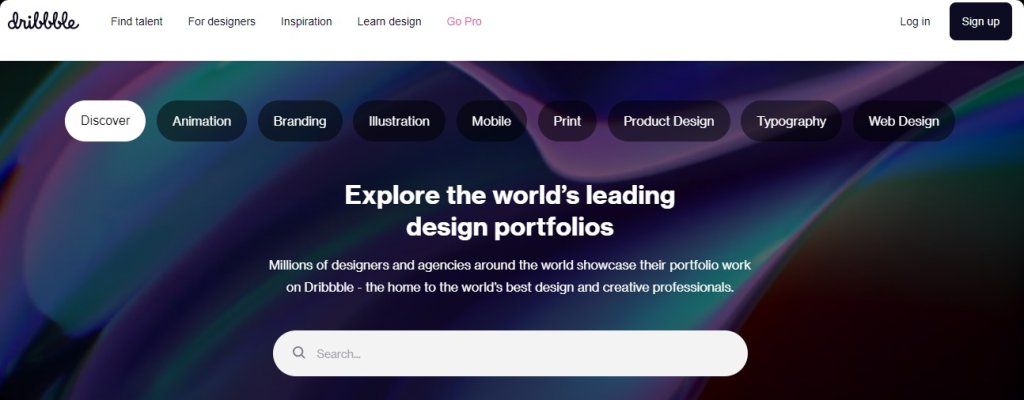
A landing page could be classed as a “click-through,” which leads to another page, like your website. Or it can be lead generation.
There are numerous types of landing page categories, such as the website homepage, click-through landing page, sales page, squeeze page, slash page, and viral landing page.
One must bear in mind the compatibility of each of these categories with mobile devices to ensure the desired immersive experience
A modern landing page is any web page that is a “door” to your website, and you must use them well by incorporating a number of techniques, having clear conversion goals.
Build better landing pages with involve.me
Get started with 300+ templates

Appointment Funnel Template
Whitepaper Download Template

Website ROI Calculator Template

Lead Magnet Quiz for Real Estate Template

Glasses Recommendation Funnel Template

Business Consultancy Appointment Template
Conversion Rates Vs. Other Metrics
The conversion rate is classed as the number of conversions divided by the number of visitors. So, for example, if a website receives 200 visitors in the space of a month, and out of these 1000 visitors, there are 50 sales, the conversion rate is 5%.
This is because 50 divided by 200 is 5. This is important because it allows you to measure the performance of web pages. Monitoring landing page performance, including metrics like conversion rates, load times, and user engagement helps optimize marketing outcomes and improve overall effectiveness.
By understanding the percentage of your users that are actually purchasing your product will help you gain insight so you can drive your website or business forward.
Comparing this to other metrics, it is vital to understand that conversion rates are not the be-all and end-all.
There are other analytics metrics that we may need to incorporate to get a better understanding, and these can include the following:
Average time on page. This is the amount of time that users spend on your website.
Sessions. This is the volume of visits to your website.
Entrance and exit rates. These measure the places such as your homepage that grants access to your website, but also how many visitors leave your website from certain pages.
Understanding average landing page conversion rates and engagement benchmarks. This helps set realistic goals and compare your results to industry standards.
Time to Interactive (TTI). This measures the time a page takes before a user can interact, and highlights the importance of pages loading quickly to reduce bounce rates and improve user experience.
Landing Page Trends For 2026
1. A More Visible Call-To-Action

A Call To Action is the part of your advertisement that tells your audience what they should be doing when they click on your ad. The very simplest example would be something like “click here now!” The more information you can give your customers with your CTA, the better it is. The intent is about giving the power to your customer and imploring them visitors to take action, turning them from a visitor into a customer.
It is something you see in any form of advertising now, predominantly because a CTA is a perfect way to finish up any form of promotion.
You see them at the bottom of a blog, or at the end of the YouTube video, where the presenter is asking viewers to like and subscribe.
In the context of landing page, a CTA button is a great ending, but placing a block of text at the end of a long piece of copy is dull and uninspiring.
A key way to make your CTA more effective could be by utilizing video backgrounds. You can also use design elements to make your CTA eye-catching, rather than just blending it into the webpage. Incorporating graphical elements such as drop shadows or contrasting visuals can help your CTA stand out and draw more attention from visitors.
Make the CTA match the ad or link. If the customers are served with an ad or click on a backlink, this will result in a higher conversion rate as the customers have a strong intent-match. Using copy that matches the ad or marketing material ensures that users know they are in the right location and this consistency of message evokes feelings of trust, crucial to a cold audience.
Create a separate mobile landing page that matches the speed of the website. It is so important to guarantee a speedy website as users are likely to click away. 1 in 4 visitors would abandon a website that takes longer than 4 seconds to load. And customer satisfaction is reduced by 16% when there is a one-second delay in your website loading. Ensuring your page load times are down and making sure that your webpage is optimized for mobile is essential. Optimizing page speed is especially crucial for retaining mobile users and improving conversion rates, as mobile users expect fast, responsive experiences.
2. Organic Intent

Getting better organic intent is not just about one component, but there are a variety of factors. Search Engine Optimization is crucial, and the way your webpage is optimized has a massive impact on how it ranks.
On-page SEO is the general practice of optimizing an individual webpage so it generates more relevant traffic and ranks higher. On-page refers to the HTML source code of a webpage as well as the content.
How Can You Optimize Your On-page SEO?
Examine the competition
To create an SEO-friendly landing page , first pick a good landing page builder, then look at your competitors. Generating the right traffic is super important, and determining your keywords is an essential practice that ensures you rank for the relevant topics.
But one way to shortcut this is to look at your competitors and the relevant keywords they use.
Remember, it is not about lifting the approaches undetected by other landing pages, but about staying true to your core idea.
If you become distracted by keywords, and pepper your website with the variations of long-tail keywords that will rank, you will navigate up that search engine results page, but you will invariably target searches that don't want your product.
Avoid using walls of text
While we hear that search engines prefer long content over shorts, this can contradict what we believe about creating high-converting landing pages.
The importance of well-researched content is important for ranking, but using small amounts of text will still yield good results in search engine rankings, just as long as there are enough backlinks to the webpage.
3. Custom Illustrations And Animations

To make an interactive landing page, you can add animations and use illustration software to create an extra dimension.
You can also provide a personalized experience through these illustrations, making them more relatable to the user, and thereby enhancing conversions.
These illustrations should match your existing design system, and can also go on to be echoed on social media content, ecommerce packaging, letterheads and business cards.
Incorporating a responsive design concept that has a clear visual hierarchy isn't just appealing to the eye, but it can increase customer engagement
Add into this the fact that interaction is a key component to enticing customers to click into your landing page, the better the analytics may be and can result in a higher likelihood of scoring leads.
For example, you can incorporate more information into a customer by looking at the number of hover events, the number of people that click on a certain product, but also look at the length of time they view a video.
4. Retro Themes

Another way to make your website look professional but also stand out is to incorporate themes from the past. Call it “retro” or “vintage,” but for striking visuals, you can incorporate different styles of typography to change the brand perception.
Headings with old school typography can create a very striking contrast, especially if you use new fonts for your main body of the text.
Take inspiration from classic typography fonts such as Baskerville, Rockwell, and Futura to give your content a vintage facelift.
You can also contrast this with contemporary typefaces like Dosis (which incorporates a sci-fi quality) or something like Playfair Display, which is a very elegant typeface.
Use off-white textures and colors. Paper-like sensations make the website look more than just a digital storefront.
And when we're talking about harking back to more retro approaches, using muted or warm colors that evoke the 1950's and 1960's advertising is a fantastic approach to do something different, but also trigger nostalgia. Incorporating a navy blue background can further enhance readability and make high-contrast elements like buttons or text stand out, improving user engagement and visual appeal.
There are so many interactive elements of vintage advertising that capitalize on the power of nostalgia and memory, and your landing page can benefit from these.
To create something striking, bringing back the old in combination with the new can make the most of your landing page.
For example, the idea of “space” in your web page is a fundamental part of your web design; and you may think that space with nothing in it is underutilized real estate on a webpage. But you can use white space to make it visually appealing. It’s also important to avoid overwhelming visitors with too much information or clutter, ensuring your content remains clear and easy to digest.
The most popular example is the Google search engine page; there is a lot of white space, and the daily animation covering a theme is a simple and striking component. After, all if it ain't broke...
Another thing to consider is oversized typography. Large and bold typography is one of the most popular trends right now.
Using large typefaces adds drama to a webpage and grabs attention instantly. And sending these messages in a “loud” manner with crisp graphics can add that instant “wow factor.”
5. Full Page Light-boxes And Email Invites

The simple square has been striking in popular art and culture for some time, from Malevich's “Black Square,” to David Bowie's “The Next Day,” and it is a very vogue component of landing page designs right now.
It is a very familiar scene; a pop-up that comes right across the center of our screen may be frustrating, but light-box pop-ups can be a fantastic way to notify users about promotions and is a great way to obtain a customers' email address.
Lest we forget, automated email marketing is still a key component to get your business substantial traffic. When it comes to customer acquisition, email is still the most important marketing strategy, even more so than social media.
And as email marketing is a very cost-effective, customizable, not to mention measurable component, using a full-page light-box is a fantastic way to grab the attention of potential customers while also utilizing this pillar of marketing tactics.
6. Amplifying Lead Generation with Forms and Quizzes

Implementing lead generation strategies on landing pages can significantly increase your conversion rates. One popular method involves the use of an ai form builder and engaging quizzes. Reducing the number of form fields to only essential information can increase completion rates and boost conversions by minimizing friction for users. This method can be particularly effective because it engages visitors and prompts them to provide valuable information about themselves.
Pro Tip: You can also build a quiz funnel quickly using the involve.me AI Agent, within seconds, then connect built-in email automation to follow up with every lead.
For instance, a health and fitness website might include a short quiz on its landing page that asks visitors about their exercise habits and wellness goals. At the end of the quiz, participants are prompted to enter their email addresses to receive personalized workout plans, with minimal need to enter sensitive information like credit card details, which helps reduce friction and encourages more sign-ups.
This dual strategy can be replicated across various industries, with quizzes and forms tailored to the specific target audience, making it a versatile and effective approach to convert visitors into leads or customers and enhance lead generation.
7. Effective Landing Page Design Trends Featuring Hero Images
One of the leading landing page design trends is the strategic use of hero images to captivate landing page visitors. An effective landing page design leverages these large, impactful visuals to instantly convey the core message and elevate the aesthetic appeal of a good landing page. Top performing landing pages consistently use compelling hero images, along with other proven elements like testimonials and trust signals, to drive higher conversion rates and set benchmarks for success.
By placing a strong, relevant hero image at the forefront, businesses can significantly enhance their landing page game, encouraging deeper engagement and guiding visitors toward a clear call-to-action.
This visual strategy is critical in building great landing pages that not only attract attention but also create a seamless user experience. For marketers seeking landing page inspiration, curated collections of exemplary designs can provide valuable ideas for crafting high-converting pages.
8. Optimized Landing Page Content
To build landing pages that effectively convert, integrating optimized landing page content is essential. A great landing page offers a seamless user experience, carefully crafting content that speaks directly to the needs and interests of landing page visitors.
This involves clear, concise messaging that aligns with the visual elements like hero images and adheres to current landing page design trends. By focusing on a user-centered approach to landing page content, marketers can enhance their landing page game, ensuring that every element works harmoniously to guide visitors toward conversion.
This strategy not only supports the goals of good landing page design but also maximizes the effectiveness of your online presence.
9. Minimal Landing Design Style: A Great Example of Modern Efficiency
Adopting a minimal landing design style is an excellent strategy for businesses looking to streamline their online presence. This approach focuses on simplicity and functionality, removing unnecessary elements that clutter the page and distract from the main message.
A minimal landing page uses clean lines, ample white space, and limited color palettes to emphasize important content and calls to action. This design style not only enhances the visual appeal but also improves usability and loading times, creating a more effective and engaging experience for visitors.
A great example of this can be seen in landing pages that effectively guide users towards a single conversion goal with clear, concise messaging and a strong, straightforward layout.
Create a high-converting landing page in minutes
Get started with 300+ templates
Appointment Funnel Template
Whitepaper Download Template
Website ROI Calculator Template
Lead Magnet Quiz for Real Estate Template
Glasses Recommendation Funnel Template
Business Consultancy Appointment Template
Testing and Optimization: Ensuring Your Landing Page Performs
Creating an effective landing page doesn't end once it goes live, and here's the reality: continuous testing and optimization are absolutely key to ensuring your landing page truly resonates with your target audience. Even the best landing page examples can benefit from ongoing refinement, because real user behavior often reveals opportunities for improvement that aren't obvious during the initial design phase (trust me on this one!).
So where do you start? By closely monitoring how your landing page visitors interact with your page, of course! Tools like heatmaps and session recordings can show you exactly where users click, how far they scroll, and which elements capture their attention. This insight is absolutely invaluable for identifying which parts of your landing page are working and which may be causing friction or drop-offs. And the reality is, without this data, you're just guessing!
A/B testing is another essential strategy for landing page optimization, and I can't stress this enough! By creating multiple versions of your landing page (each with slight variations in design elements, headlines, or calls-to-action), you can see which version delivers more conversions and better engages your audience. This data-driven approach ensures that every change you make is backed by real results, not just assumptions. Pretty powerful stuff, right?
Remember, a great landing page is never truly finished! Regularly review your analytics to spot trends and test new ideas, whether it's tweaking your landing page form, updating visuals, or refining your messaging. By prioritizing the needs and preferences of your target audience, you'll create an effective landing page that not only attracts more visitors but also converts them into loyal customers. And that's exactly what we're all after!
Ultimately, the most effective landing pages are those that evolve alongside user expectations and digital marketing trends. Make testing and optimization a core part of your landing page creation process, and you'll consistently deliver a great landing experience that drives results. The key is staying committed to this ongoing process, your conversions (and your bottom line) will thank you for it.
Conclusion
Whether it is about changing your approach to the layout of the webpage, making the most of SEO, or going back to basics, the design of a landing page is not about one approach.
It is a cumulative effort that requires the designer to strive hard to innovate, take risks, but also keep their ear to the ground for contemporary trends.
Molding a landing page from a collection of images and ideas into something that is truly stylistic, beautiful, and an honest work of art can pique the interest of a customer.
It can turn a business into something that truly rewards the customer journey, resulting in happier customers.


